
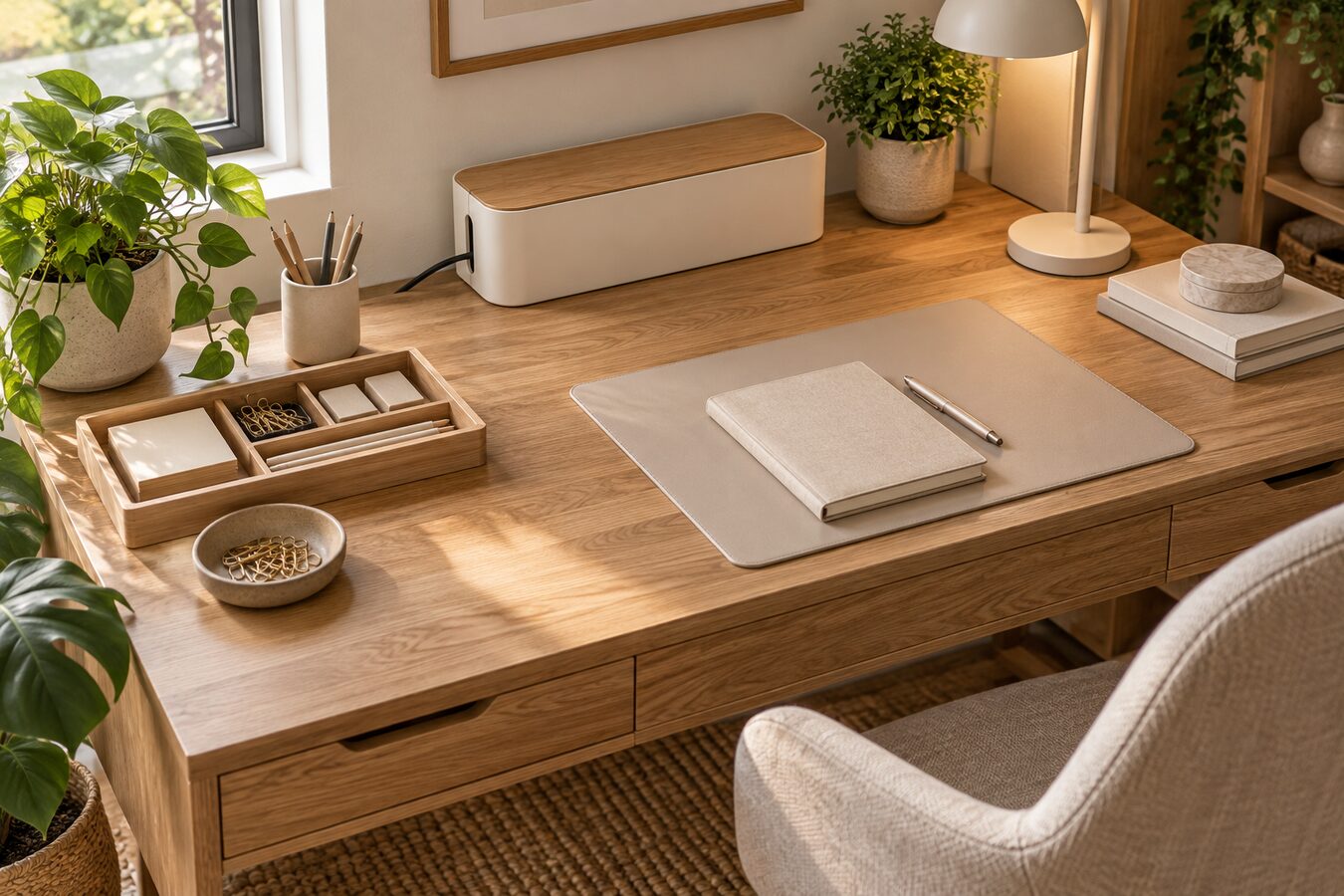
A desk feels more useful when its surface has room for the task in front of you. Small trays and a consistent place for supplies can keep everyday tools close without spreading them across the workspace. Look at the difference between things used during every session and supplies kept for occasional tasks. Giving those groups different places can release useful surface area. The desk should still feel convenient: repeatedly opening a distant cupboard for a daily tool can make organization harder to maintain.
Start with the objects you use during a normal working session. Put occasional supplies in a drawer and choose a simple route for cables that keeps them accessible and clear of the work area. Measure a tray around its contents rather than choosing one only for its appearance. Pens, clips and notebooks need different amounts of space. Keep containers shallow enough to see into, and avoid stacking frequently used items so that one must be removed to reach another.
✓ Keep daily tools in one shallow tray
✓ Return occasional supplies to a drawer
✓ Leave the central work area open
✓ Check cables before closing storage around them
Give your home office arrangement a short trial before adding more containers. Notice what stays in place and what gathers elsewhere; those small observations tell you which part of the system needs adjusting. If cables or charging equipment are stored together, follow their ventilation and safety instructions. Do not cover devices that need airflow. A clear route and accessible connections are more useful than concealing everything inside a container that was not designed for electrical equipment.
A clear desk is a practical starting point, not a display that must stay untouched. Let the arrangement follow real use, with clear places for everyday items and enough space to adjust when the routine changes.
John Doe
There is no need to organize the entire home in one session. Start with one useful part of your home office, live with it for a while and make small changes where they help. At the end of a session, return the tools you used and leave the next task a clear starting point. This does not require removing every object. A lamp, notebook or familiar tray can remain in place when it supports the way you use the desk.
Khizana’s approach is to make everyday spaces easier to use and easier to reset. Choose practical proportions, keep the routine simple and leave enough room for real life. Review the arrangement when your work changes. A drawer that once held paper supplies might become a better place for equipment, while a tray may no longer be necessary. Let the storage follow the current routine rather than preserving an arrangement simply because it once worked.