
A lampshade gives a fixture its outline, but it also decides where much of the light will travel. A wide opening can bring useful brightness to a table, while a more enclosed form may make the shade itself feel like the main presence in the room. Before choosing a shape, think about what happens around the lamp and which surfaces need attention. The most successful shade feels balanced with its base and directs light in a way that supports the setting, whether it sits beside a sofa or above a dining table.
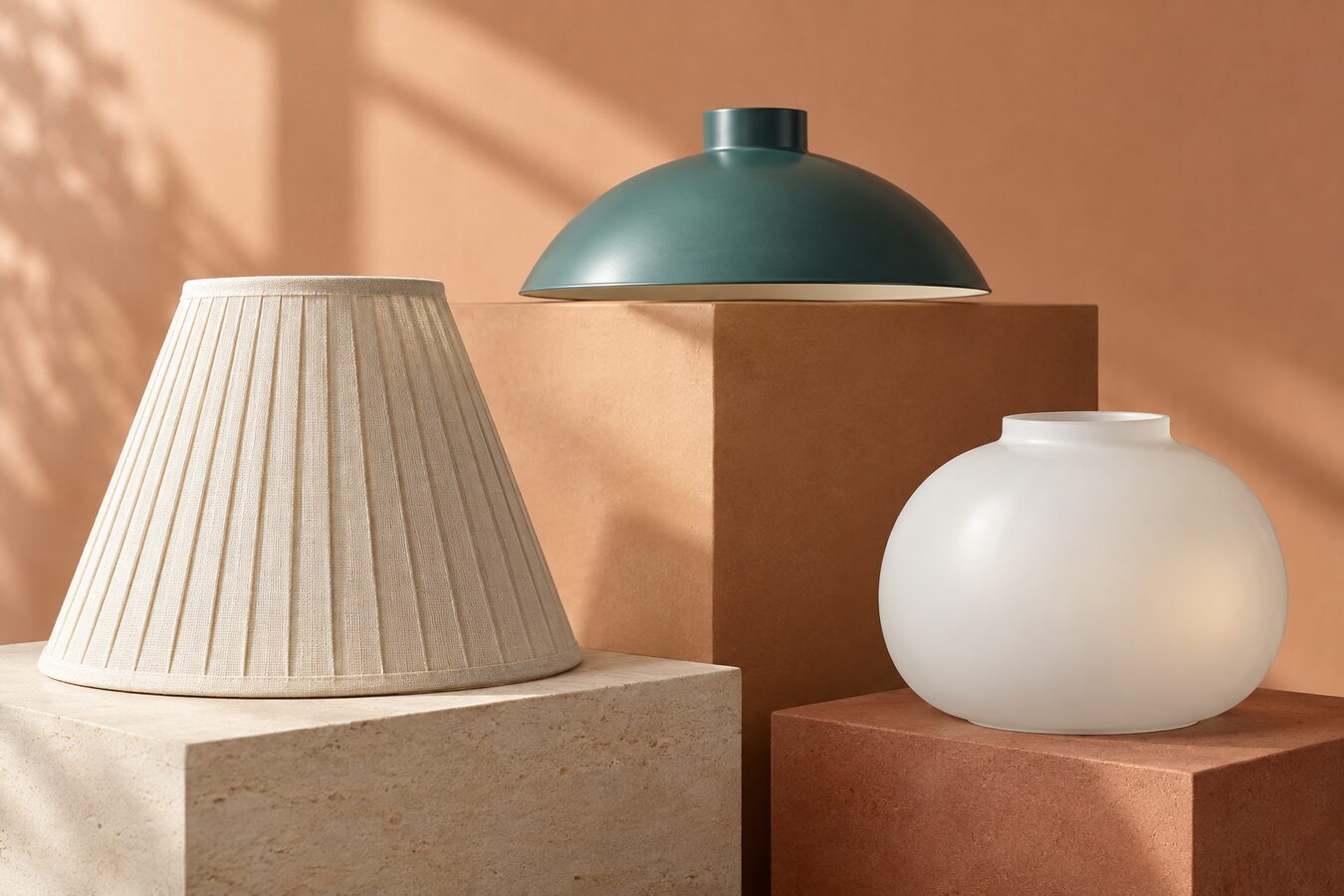
Begin by looking at the openings rather than the silhouette alone. An opaque shade with an open lower edge tends to concentrate light beneath it, while translucent fabric can allow a gentler glow through the sides. A narrower top opening may add a little brightness above the fixture. These different paths of light affect the room as much as the colour or texture of the material wrapped around the frame.
Scale matters when the shade sits on a base or near another object. A generous drum can soften a slender stand, while a tapered form may leave more visual space around a compact table. Check the combined height and width, along with the product's fitting requirements. A shade should be suitable for the fixture and lamp, with the clearances specified by the manufacturer maintained around every part of the assembly.
Think of a shade as a way to shape light as well as an object. Its openings, material, and proportions should work together to give the surrounding room the glow it actually needs.
John Doe
Test the likely sightlines before deciding that a shape is right. From a low chair, the lamp inside may be visible beneath a shade that looks perfectly comfortable when viewed standing up. A different height or more enclosed profile can change that impression. Consider the finish of the inner surface too, since it can influence the appearance of the light falling onto a page, a tabletop, or the wall beside it.
Let the shade's outline support the larger arrangement of the room. Rounded forms can soften strong horizontal furniture, while a cleaner straight-sided shape may bring order to a corner filled with texture. There is no need to repeat the same profile everywhere. Choose a few clear relationships and allow each fixture to answer its own practical task, so that the room feels connected through thoughtful light rather than through a set of identical decorative objects.