
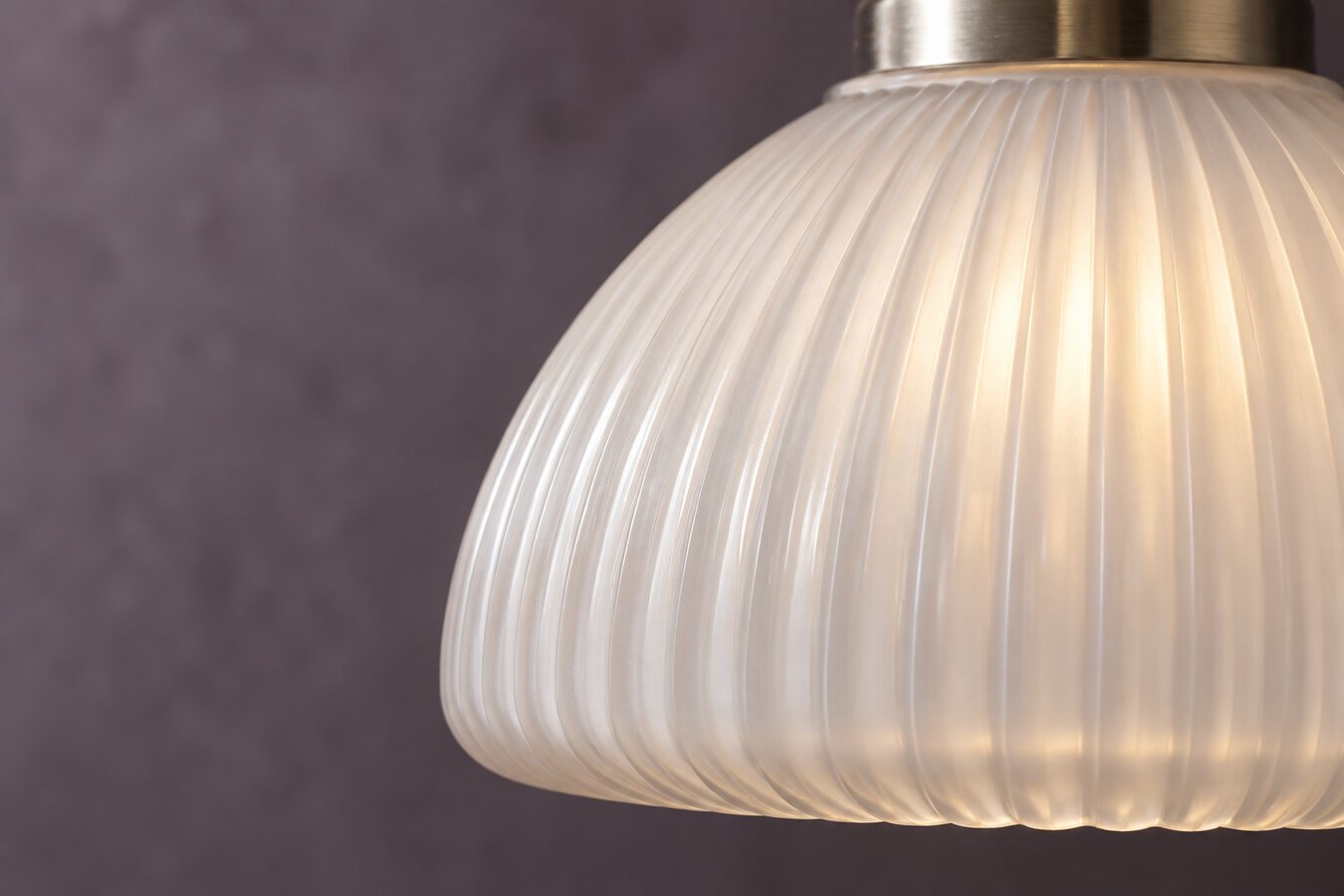
Diffused glass changes the character of a light by softening the view of its source. Instead of a sharp point of brightness, the shade becomes a quieter glowing form that can sit comfortably among timber, fabric, and painted surfaces. This quality makes glass especially interesting in places where a fixture is visible from several directions. Before choosing a design, look at the shape both illuminated and unlit, considering how its surface, proportions, and level of translucency will belong to the rest of the room throughout the day.
Not all glass creates the same effect. An opal finish can spread light evenly across the shade, while a lightly textured surface may leave a more varied pattern of brightness. Clear glass reveals more of the lamp inside and asks for a different kind of attention. Compare the intended lamp with the shade rather than judging the glass alone, because the combination determines the final impression in your particular room.
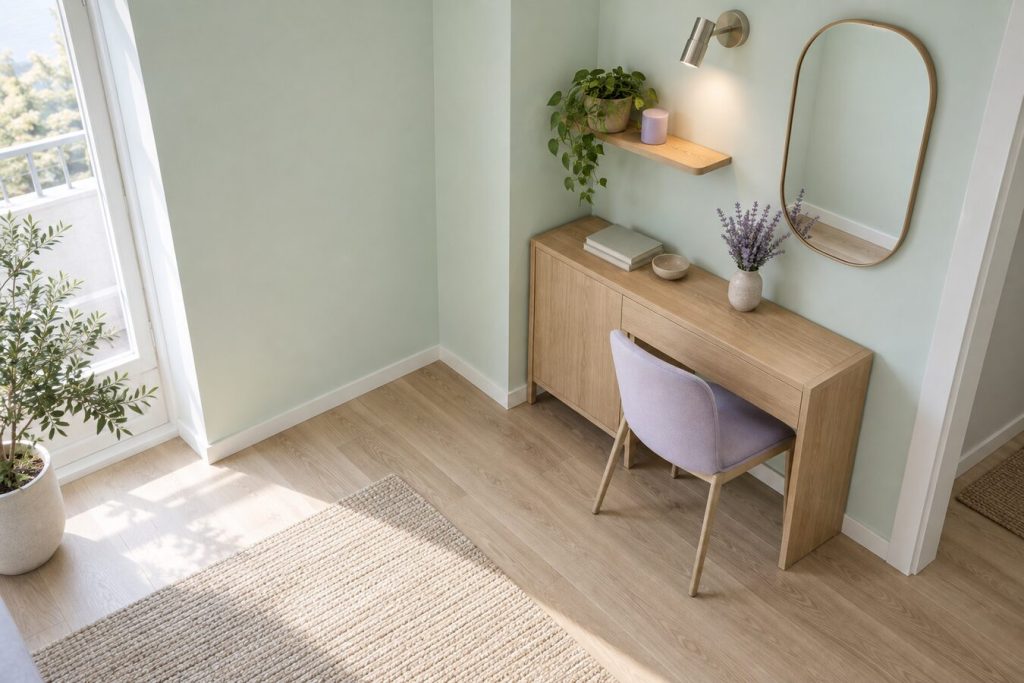
The surrounding materials help shape that impression too. A softly glowing globe beside matte plaster may feel very different from the same fitting near a mirror or polished stone. Notice whether the glass is adding a gentle layer of light or becoming the brightest object in view. In a restful corner, a smaller output or compatible dimming arrangement may allow the luminous surface to feel present without taking over the scene.
A diffusing shade works through the relationship between surface and source. Its appeal lies in the way it turns a practical lamp into a softer volume of light within the surrounding room.
John Doe
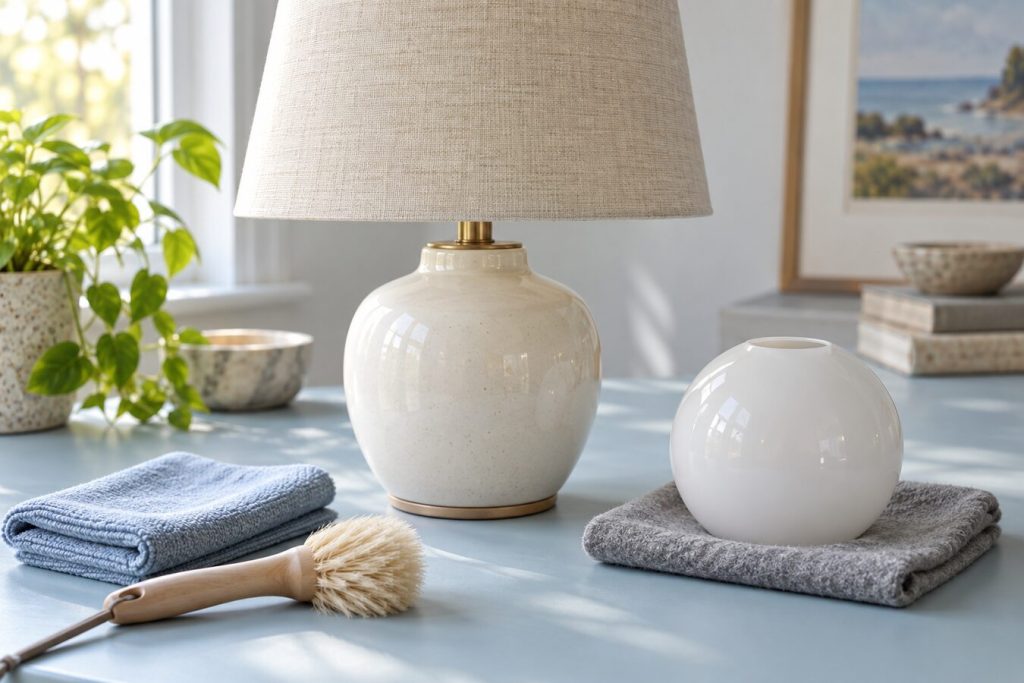
Think about the height and angle from which the fixture will usually be seen. An open lower edge may reveal the lamp when viewed from a sofa, even if the side of the shade feels beautifully soft. Check the product details and use the specified lamp type. Keep the glass clean according to the care instructions, since dust and fingerprints can become more noticeable when a surface is illuminated from within.
Choose a glass form that contributes something clear to the composition. A round shade might ease the lines of a squared cabinet, while a longer shape can echo the proportions of a tall window. Allow enough space around the fitting for that silhouette to be read. When the light, shape, and nearby textures work together, the glass can bring a calm sense of depth that remains appealing even after the fixture has been switched off for the night.