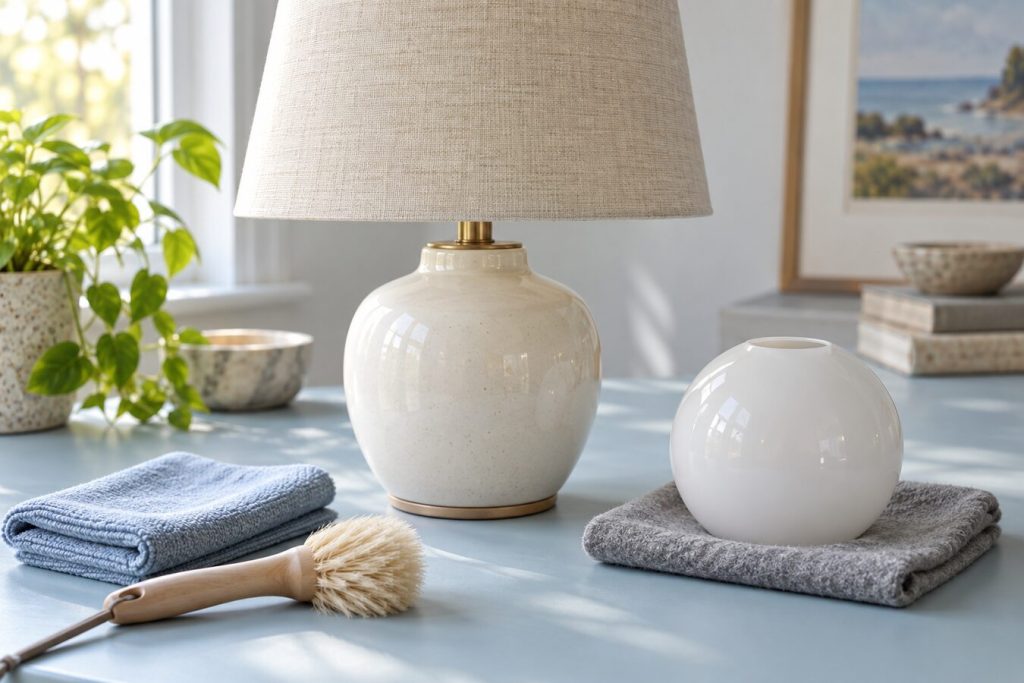

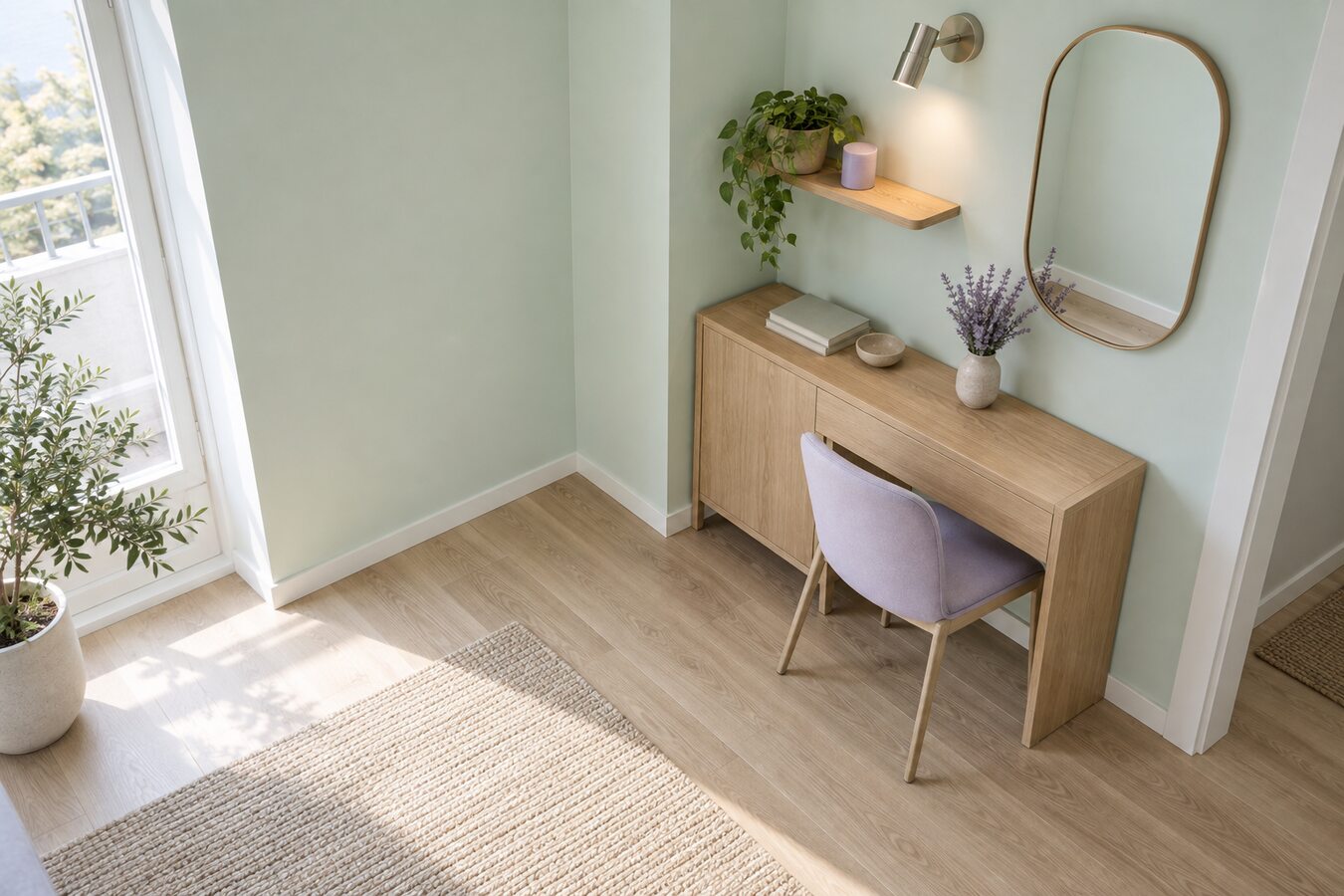
Compact rooms benefit from lighting that earns its place in more than one way. A well-positioned lamp can make a corner useful, reveal the texture of a wall, and give the evening a gentler atmosphere without occupying much space. Begin by mapping the activities that happen in the room, including the small ones that furniture plans often overlook. A place to read, a surface for keys, or a desk used after dinner may need a different kind of light from the centre of the room itself during an ordinary day.
Choose positions that preserve the surfaces and routes you use most. A slim floor lamp can reach over the edge of a chair, while a suitable wall fitting may free a narrow bedside table. A compact table lamp can still work beautifully when its base leaves enough room for daily objects. Think about the whole footprint, including the cable and the space needed to reach a switch or adjust the shade.
Using the walls as part of the scheme can make a small room feel less enclosed. A soft wash across a pale surface adds another plane of brightness without requiring a large central fixture. Keep the result balanced with the task areas rather than making every corner equally bright. A little variation gives the room depth and lets different activities have a clear place within the same modest amount of space.
Useful light does not need a large footprint. The right position can give one small fixture a clear purpose, while keeping furniture, movement, and the surrounding surfaces comfortably free to do their own work.
John Doe
Look for flexible adjustments that solve a real need. A movable shade can follow a book or a small work surface, but an oversized arm may be awkward in a tight corner. Check dimensions against the available space and leave the required clearances around the fitting. Keep cables out of walking routes, and ask a qualified installer about fixed options when a wall-mounted arrangement would make better use of the room.
Finish by editing the visual details around each source. A lamp often feels more generous when nearby objects have a little breathing room, even if the fixture itself is small. Repeat a material or colour from the room to help it settle into the composition. With a few purposeful layers, a compact setting can move easily between work, conversation, and rest, offering the light each activity needs without making the space feel crowded with equipment.

