

Free delivery on tea orders over $55
Freshly packed • Whole leaf • Easy gifting
A small detail for a better everyday cup.
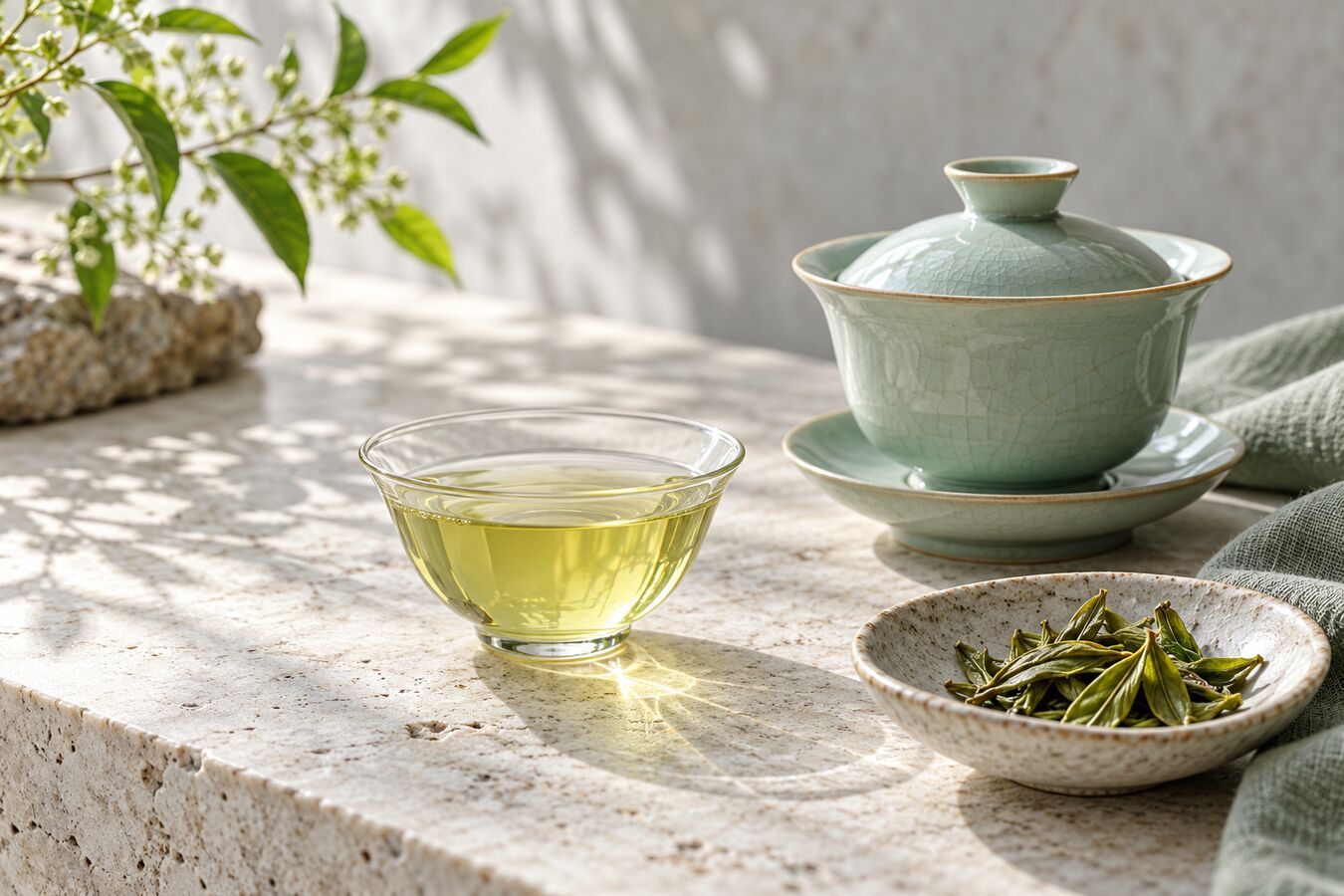
A green tea can move from delicate to demanding with only a small change in the kettle. Before adding more leaves or reaching for a sweetener, give the water a moment to settle. The aim is a cup in which fresh, floral and lightly toasted notes have room to appear together. Start with the brewing guide on the pack, use a cup you know well and keep the first attempt simple. Familiar equipment makes it easier to notice what the leaf itself contributes to the experience.
Measure the leaves consistently, but remember that a spoonful of long, open leaves weighs differently from a spoonful of tightly rolled tea. If you enjoy comparing cups, a small kitchen scale can make that comparison clearer. There is no need to turn every brew into an experiment. One careful starting point gives you a useful reference that you can return to whenever a cup feels unusually strong or faint.
✓ Let boiling water cool first
✓ Give the leaves room to open
✓ Time the first infusion carefully
✓ Taste before changing the recipe
A roomy basket is often more useful than a tiny infuser. Leaves need contact with water, and compressed leaves need space to unfold. Pour the finished infusion into your cup when the timer ends, rather than leaving the basket to steep while you drink. That simple separation keeps the first mouthful and the last mouthful closer in character, especially when you are still discovering the strength you prefer.
The clearest cup is not necessarily the palest one. It is the cup in which you can recognise the leaf, enjoy its texture and still want to take another unhurried sip.
John Doe
Taste while the tea is warm, then return to it as it cools slightly. An aroma that seemed shy at first may become easier to describe after a few minutes. Try ordinary words such as fresh grass, steamed greens, flowers or toasted grain. Your own associations are useful notes; they do not need to sound like a specialist tasting sheet to help you choose the next brew.
If the cup feels too sharp, change one thing next time: use slightly cooler water or a shorter steep. If it seems thin, try a little more leaf before extending the time dramatically. Small adjustments make the result easier to understand. Write down the combination that works in the kitchen you actually use, with the cup you actually reach for. A dependable daily recipe is more valuable than chasing somebody else’s perfect temperature.
Search loose-leaf teas and botanical blends.

