

Free delivery on tea orders over $55
Freshly packed • Whole leaf • Easy gifting
A small detail for a better everyday cup.
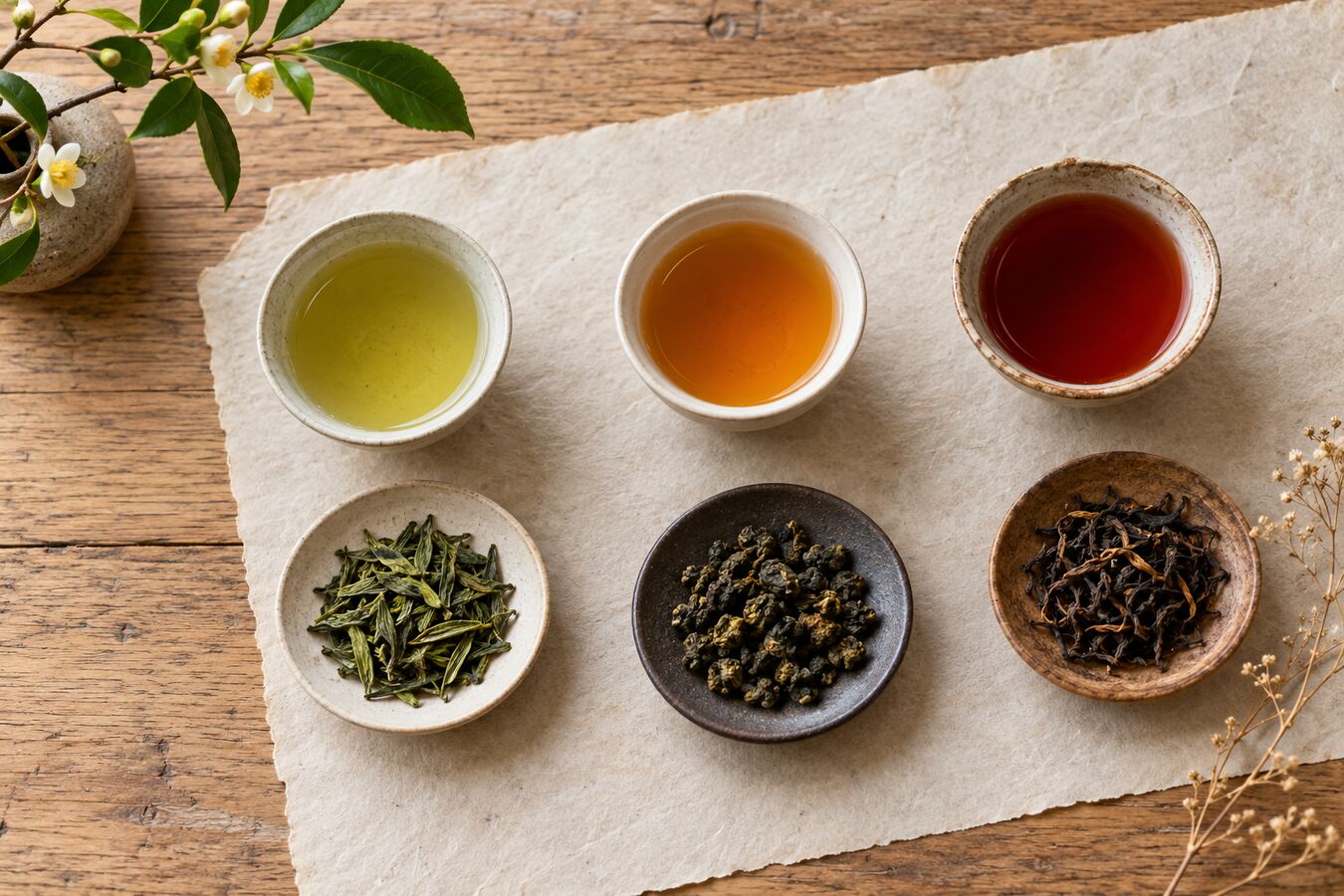
A small tea tasting works best when the table leaves room for attention. Choose three distinct blends rather than a long sequence, prepare familiar cups and keep the portions modest. The aim is to notice contrasts without tiring your palate or turning the gathering into a lesson. A bright green tea, a warmer black blend and a soft botanical infusion can offer a clear starting range. You can also compare three teas from one family, provided each has a different enough character to make the conversation interesting and the choices easy to remember.
Plan the brewing order before the kettle goes on. Lighter and quieter teas are often easier to appreciate before strongly spiced or roasted ones. Read each pack’s guide and allow time for different temperatures or steep lengths. Keep the process manageable by preparing one tea at a time rather than trying to finish every cup simultaneously. A relaxed pace gives each serving room to make an impression before the next one arrives at the table.
✓ Choose three contrasting blends
✓ Keep tasting portions small
✓ Brew each tea as directed
✓ Leave time between the cups
Set out plain water and a simple neutral bite if you want something alongside the tasting. Heavily flavored foods can make the comparison less clear, especially at the beginning. Keep the tea packaging or a short ingredient note nearby so that questions about the blends are easy to answer. There is no need for formal scorecards. A few words about aroma, texture and finish are enough to give the conversation a useful shape.
A tasting is successful when each person leaves with a clearer sense of what they enjoy. The table does not need to agree on a winner for the cups to have offered something worth noticing together.
John Doe
Encourage everyone to taste before hearing a detailed description from somebody else. This gives quieter impressions a chance to emerge and avoids having the whole table search for the first note that was mentioned. After a sip, compare the words people chose and notice where they overlap. Different associations can be equally useful, especially when they point toward a shared impression of brightness, warmth, dryness or a rounded and lingering finish.
End with a familiar cup or invite each person to return to the blend they most enjoyed. That final choice is often more revealing than a numerical ranking. Make a short note of the teas and their brewing recipes so the gathering is easy to repeat without becoming identical. Next time, change one blend or explore a different family. A small, considered tasting can become an enjoyable way to discover new directions while keeping the pleasure of an ordinary cup at its center.
Search loose-leaf teas and botanical blends.

